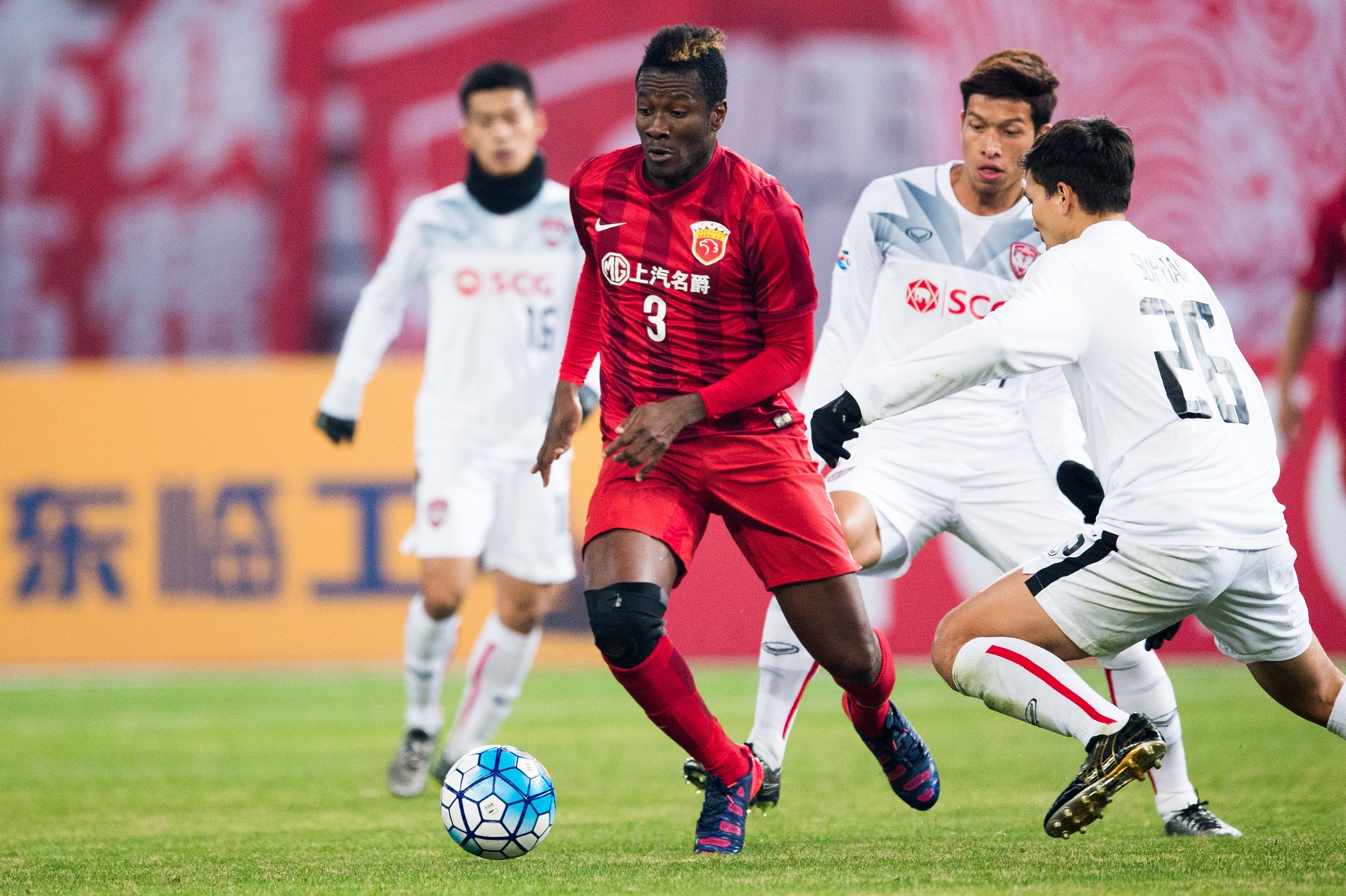
There was a time when Chinese football felt like the next great disruption in the global game.
Europe watched nervously. Agents paid attention. Premier League clubs suddenly had a new financial rival. Players who might once have been linked with England, Spain or Italy were being offered life-changing contracts in the Chinese Super League.
The names were huge. Oscar. Hulk. Carlos Tevez. Ramires. Alex Teixeira. Jackson Martinez. Ezequiel Lavezzi. Graziano Pelle. Javier Mascherano.
For a short period, China did not just want to join football’s elite. It wanted to buy its way into the conversation.
The Chinese Super League became one of the most talked-about competitions in world football. Transfer fees rose sharply. Wages became extraordinary. Clubs backed by powerful companies were suddenly signing players that European sides still wanted.
It looked like the start of something enormous.
Then the bubble burst.
The money slowed. The stars left. Clubs collapsed. Salary caps arrived. The national team failed to become a major force. Corruption scandals returned to the headlines. The dream of turning China into a football superpower suddenly looked much further away than it had during the golden spending years.
So what happened to Chinese football?
The simple answer is that China spent too much, too quickly, without building enough underneath it.
The more interesting answer is that Chinese football confused attention with progress.
The Chinese Super League became famous. But fame is not the same as foundations.
The dream was bigger than club football
To understand the rise and fall of Chinese football, it is important to start with the ambition behind it.
This was never only about a domestic league trying to become more entertaining. It was tied to a much larger national vision.
China wanted football to become part of its global sporting identity. The country had already shown it could dominate Olympic sports, build world-class infrastructure and host major events. Football was different. It carried cultural power. It was watched everywhere. It shaped global conversation in a way few sports could.
The long-term ambition was clear: China wanted to become a serious football nation.
There were targets around youth participation, football schools, coaching, pitches and the wider development of the game. The ultimate dream was even bigger. China wanted to build towards becoming a world football power.
That ambition made sense on paper.
China has a huge population. It has financial power. It has political focus. It has the ability to build facilities at speed. If any country could decide to change its football status through planning and investment, China looked like an obvious candidate.
But football is not just an infrastructure project.
You cannot build a football culture in the same way you build a stadium. You cannot create elite players simply by announcing a long-term plan. You cannot buy history, habits, street football, supporter identity, coaching instincts and competitive pressure overnight.
That became the central problem.
China’s professional league raced ahead of the country’s football ecosystem.
The top of the pyramid became expensive. The bottom of the pyramid was not strong enough.
When the Chinese Super League shocked Europe
The boom years were spectacular.
Chinese Super League clubs began making moves that changed the global transfer market. Players who were not finished, not unknown and not completely unwanted were suddenly moving to China.
Oscar’s move from Chelsea to Shanghai SIPG was one of the defining deals. He was only 25. He had played regularly in the Premier League. He had won major trophies. He was not an ageing player looking for one final contract at the end of his career.
That was why the transfer mattered.
It showed that China could tempt players who should have been entering their prime years.
Hulk’s move to Shanghai SIPG made another statement. Alex Teixeira joined Jiangsu Suning after being linked with Liverpool. Ramires left Chelsea for Jiangsu. Jackson Martinez swapped Atletico Madrid for Guangzhou Evergrande. Carlos Tevez joined Shanghai Shenhua in a deal that became a symbol of the entire era.
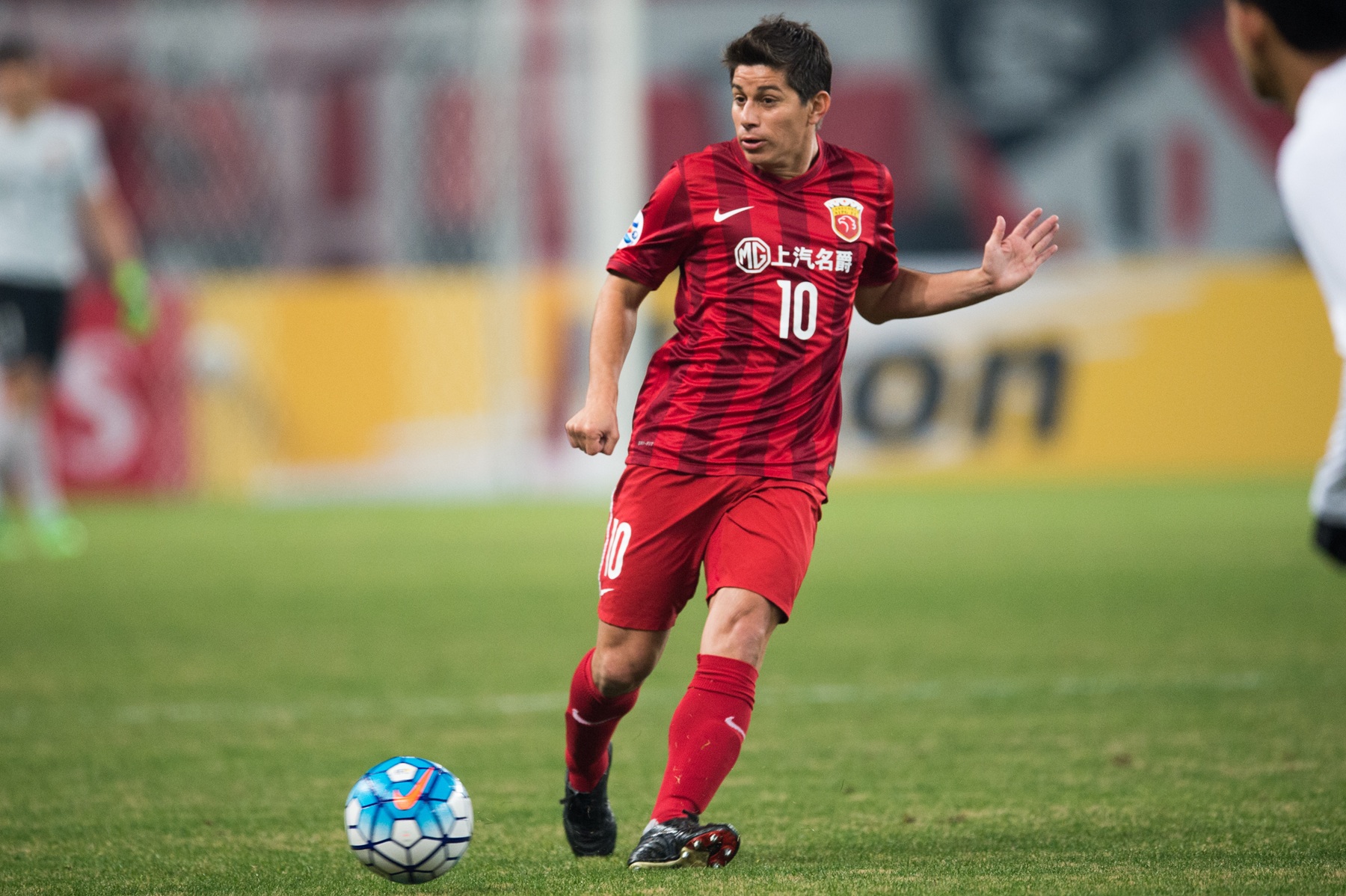
Suddenly, the Chinese Super League was not a distant market. It was a major player.
The wages were impossible to ignore. Some players were offered salaries that even elite European clubs would not match. For clubs in China, the logic was simple. Big names would raise the profile of the league. Bigger profile would bring attention. Attention would create growth.
In the short term, it worked.
The league became famous. It became a regular part of transfer gossip. Supporters in Europe suddenly knew the names of Chinese clubs. Every window brought another rumour that a major player could be heading east.
There was a sense that China might do to football what it had done in other industries: arrive late, spend heavily, scale quickly and become impossible to ignore.
But football does not always reward speed.
The Chinese Super League bought visibility. It did not buy durability.
The transfer policy was exciting but flawed
The biggest mistake was not signing foreign stars. Strong leagues often need imported quality.
The problem was the imbalance.
The Chinese Super League spent like a competition that was already globally secure, when in reality it was still trying to develop its roots.
There were too many expensive headline signings and not enough patient structural gains. Clubs were chasing names, status and instant credibility. That made the league more glamorous, but it did not necessarily make Chinese football healthier.
Foreign attackers could win matches. They could score spectacular goals. They could fill highlight reels. They could give the league global attention.
But they could not solve the deeper problems.
They could not instantly create elite Chinese coaches. They could not make youth academies world class by themselves. They could not turn domestic players into leaders if those players were constantly built around imported match-winners. They could not create local football culture in cities where clubs sometimes felt more like corporate brands than historic community institutions.
That is the key point.
China imported stardust. It did not export enough progress.
The best foreign players gave the league moments of quality. Some took the project seriously and performed well. Oscar, in particular, became more than a short-term visitor. He stayed, won trophies and became one of the few clear success stories of the era.
But individual success stories could not save the wider model.
The league needed a generation of Chinese players to rise with the investment. That did not happen at the level required.
The national team did not follow the money
The biggest judgement on Chinese football is not the number of famous players who arrived. It is the lack of improvement in the national team.
That is where the project looks most disappointing.
China has still only appeared at one men’s World Cup, in 2002. That appearance was historic, but it did not become the start of a new era. China lost all three group games and failed to score.
More than two decades later, the country is still waiting for a return.
That is a brutal reality for a nation that invested so heavily in football.
The Chinese Super League boom was supposed to raise standards. Better foreign players were supposed to improve the environment. Better clubs were supposed to create better domestic players. Better domestic players were supposed to create a stronger national team.
The chain did not work.
In fact, the link between club spending and national-team improvement was always weaker than it looked.
A domestic league can spend heavily and still fail to develop local players if the structure is wrong. If the best roles are taken by foreign stars, domestic players can become supporting actors. If clubs are focused on short-term results, young players may not get enough responsibility. If coaching and academy pathways are inconsistent, money at first-team level does not fix the system.
China’s World Cup failures are therefore not a mystery. They are evidence.
The top of the league became more expensive, but the player development pipeline did not transform quickly enough.
That is why the phrase “football superpower” began to feel less like a plan and more like a slogan.
The bubble was never truly sustainable
The Chinese Super League boom had another major weakness: many clubs were not built on sustainable football income.
They were often dependent on wealthy owners, corporate backing and broader business interests. That made them powerful when the parent companies were strong, but vulnerable when priorities changed.
In Europe, many big clubs have deep roots. They have generations of supporters. They have local identity. They have matchday culture. They have commercial value built over decades. Even when they are badly run, they often remain socially and commercially important.
Chinese clubs did not always have that level of protection.
Some were tied closely to companies. Some changed names. Some lacked the emotional history that makes clubs feel permanent. Some were projects before they were institutions.
That mattered when the money tightened.
If a club is mainly a corporate project, it can disappear when the corporate logic changes.
The clearest example was Jiangsu FC.
Jiangsu won the Chinese Super League title in 2020. Months later, the club ceased operations. For the reigning champion of a major league to effectively disappear was a stunning symbol of the crisis.
It showed that the Chinese Super League’s problem was not just overspending. It was fragility.
A league cannot build credibility when even its champions can vanish.
That story did huge damage to the idea that Chinese football was on a stable long-term rise.
Regulations changed the game
The authorities eventually moved to slow the spending.
That was understandable. The sums had become extreme. There was concern that money was being wasted on foreign players rather than used to develop Chinese football. There was also concern that clubs were building financial models that could not last.
Transfer taxes, salary caps and tighter rules changed the market.
The effect was immediate.
China could no longer simply win by offering salaries that nobody else would pay. Once the financial gap narrowed, the appeal of the Chinese Super League changed dramatically.
For many foreign stars, the move had always been about money first. That does not mean they were all unprofessional. Many performed well. But the financial incentive was the main reason China could compete with Europe.
Remove that advantage, and the league was no longer as attractive.
This is where the boom began to fade.
Top players stopped seeing China as the obvious big-money destination. Agents looked elsewhere. Clubs became more cautious. The days of shocking Europe with giant offers were over.
The Chinese Super League went from being a transfer-market disruptor to a league trying to repair itself.
Covid exposed the cracks
The Covid period made the crisis worse.
Football in China, like football everywhere, was hit by restrictions, travel problems and financial pressure. But China’s league was especially vulnerable because its boom was already slowing and its business model was already under strain.
Foreign players found it harder to come and go. Some wanted to leave. Clubs faced revenue problems. The matchday experience was damaged. The global attention moved elsewhere.
But Covid should not be seen as the reason Chinese football collapsed.
It was more like a stress test.
And Chinese football failed that stress test because the structure was already weak.
The money had created the appearance of strength. The pandemic revealed how little protection there was underneath.
The property crisis and ownership pressure
Another major factor was the financial pressure around some of China’s biggest companies, including those connected to the property sector.
This matters because several football clubs were tied to powerful business groups. When those groups were thriving, football spending looked possible. When those groups came under pressure, football became a cost.
Guangzhou Evergrande was the most obvious example of how the wider economic picture affected football.
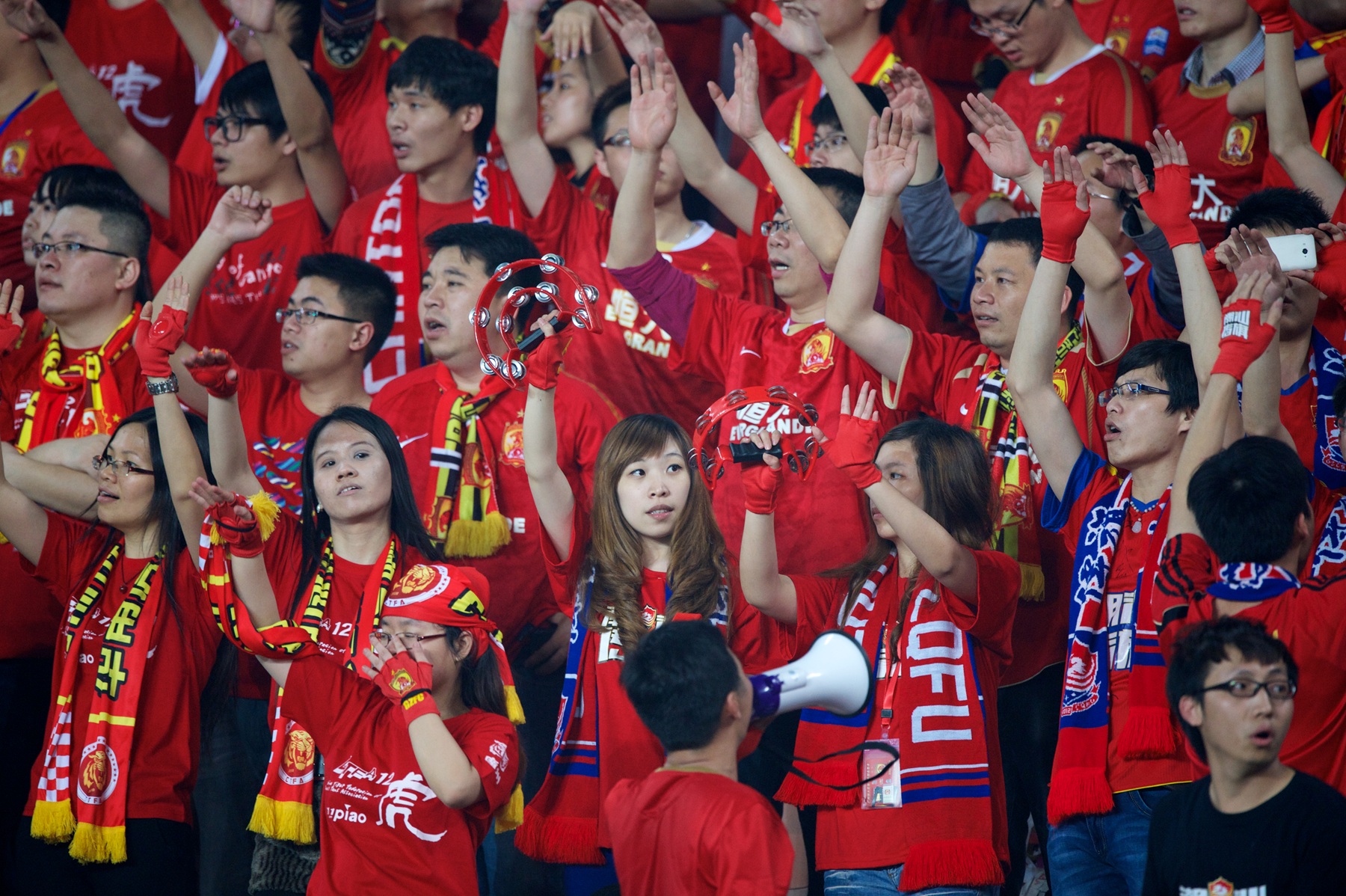
For years, Guangzhou were the flagship of Chinese club football. They won domestic titles. They won the AFC Champions League. They signed major foreign players. They became the club most closely associated with China’s football ambition.
But when Evergrande’s wider financial problems became global news, the football project lost its shine. The club’s decline became symbolic.
Again, the lesson was clear.
Chinese football had relied too heavily on outside financial muscle and not enough on self-sustaining football economics.
A healthy league cannot depend on corporate confidence alone.
Corruption damaged trust
Then there is the issue that has haunted Chinese football for years: corruption.
No serious feature on Chinese football can avoid it.
The recent anti-corruption crackdown has shown the scale of the problem. High-profile figures have been punished. Former national team coach Li Tie was sentenced to 20 years in prison for bribery. In 2026, dozens more people were banned for life as part of another major scandal, while clubs were punished with points deductions.
This matters because corruption attacks the very thing football needs most: belief.
Supporters need to believe matches are real. Players need to believe opportunity is fair. Parents need to believe their children are entering a credible system. Sponsors need to believe the competition has integrity. International observers need to believe the league is serious.
When match-fixing, bribery and gambling scandals dominate headlines, that trust is damaged.
It also undermines development.
A country can build pitches and academies, but if the system is not trusted, the pathway becomes weaker. Talent does not flourish in an environment where connections, influence or corruption can distort opportunity.
For China, the corruption issue has been more than an embarrassment. It has been a structural wound.
The current crackdown may help clean up the game in the long term. But it also highlights how far Chinese football still has to go before it can be taken seriously as a global football power.
Why expensive foreign stars were never enough
The easiest mistake is to look back and say China should never have signed big-name players.
That is too simple.
Foreign stars can help a league. They can improve standards. They can inspire young players. They can raise professionalism. They can attract viewers. They can create commercial growth.
The issue is not foreign talent. The issue is dependence.
The Chinese Super League needed foreign stars to add quality to a strong local system. Instead, in many cases, the foreign stars became the system.
Too much of the league’s identity was based on who it could buy next.
That is dangerous.
A league built around imported names is only exciting while the names keep arriving. Once they stop, the story disappears. The league then has to rely on its clubs, rivalries, local players, atmosphere and competitive quality.
Chinese football had not built enough of that.
That is why the fall felt so dramatic.
The global audience was never deeply attached to the league itself. It was attached to the transfer spectacle. When the spectacle ended, much of the attention went with it.
The supporter culture question
Chinese football also faced a cultural challenge.
Football fandom in China certainly exists. There are passionate supporters. There are clubs with real local followings. There are fans who care deeply.
But the sport has not been woven into everyday life in the same way it has in countries such as England, Brazil, Argentina, Germany, Italy or Spain.
That matters.
In football’s strongest nations, the game is not only watched. It is inherited. Families pass clubs down. Children play constantly. Local pitches are part of community life. Football arguments are part of the culture.
China has been trying to accelerate something that usually takes generations.
That does not mean it cannot happen. But it does mean there are limits to what money can achieve.
You can buy players faster than you can build habits.
You can build stadiums faster than you can build obsession.
You can announce targets faster than you can create football identity.
That is one reason the rise of amateur and grassroots competitions in China is so interesting. If there is a real route back, it may come less from another transfer boom and more from local football becoming genuinely popular from the bottom up.
Was the Chinese Super League boom a total failure?
Not completely.
It would be unfair to say nothing positive came from the boom.
The league did improve its global profile. Some clubs became more professional. Some foreign players performed well and took the competition seriously. Chinese football gained attention it had never previously enjoyed. Investment did go into facilities, academies and football education in various forms.
The boom also forced a conversation about what Chinese football wanted to be.
But judged against the size of the ambition, the impact was limited.
The national team did not become strong. The league did not become a permanent global force. The biggest foreign names mostly left. Several clubs struggled or disappeared. The financial model had to be restricted. Corruption remained a major issue.
That is why the overall verdict has to be harsh.
China did not waste every penny. But it wasted the moment.
The country had the world watching. It had the transfer market talking. It had momentum. It had the chance to turn the Chinese Super League into a credible long-term project.
Instead, the boom became a warning.
The comparison with Saudi Arabia
The Chinese Super League story is especially relevant now because of Saudi Arabia’s rise in football.
Saudi clubs have also spent huge money on foreign stars. Cristiano Ronaldo, Karim Benzema, Neymar, Sadio Mane, Riyad Mahrez and many others have moved there. The Saudi Pro League has attracted global attention in a way that feels similar to China’s boom years.
But there are differences.
Saudi Arabia has tied its football spending to a much larger sports and tourism strategy. It has also secured major events and is building a broader global football presence. The financial backing appears more centralised and state-linked than the corporate-heavy Chinese model.
Even so, the China lesson still applies.
Spending can create attention. It cannot guarantee transformation.
If Saudi football wants long-term success, it must do what China struggled to do: build domestic players, deepen supporter culture, improve coaching, create sustainable clubs and make the league interesting beyond the imported stars.
Otherwise, the same question will eventually be asked again.
What happened after the money?
Where Chinese football goes from here
Chinese football is not dead.
That is important.
The Chinese Super League still exists. Clubs still compete. Fans still care. Young players are still trying to develop. Grassroots football may yet become a more meaningful part of the country’s sporting culture.
But the next version of Chinese football has to be different.
It has to be more realistic. More patient. More local. More sustainable.
The old model was built around spectacle. The next model must be built around trust.
That means proper academies. Better coaching. Stronger governance. Financial discipline. Cleaner competitions. More playing time for domestic talent. Clubs with identities that supporters can actually feel connected to.
It also means accepting that football development is slow.
China cannot become a football superpower just because it wants to. It cannot skip the hard parts. It cannot buy the soul of the game.
The next success story, if it comes, will probably not be a £50m foreign signing arriving at Shanghai airport. It will be a Chinese teenager developed properly, trusted in the first team, tested in serious competition and good enough to move the national team forward.
That is less glamorous. But it is more important.
The final verdict
So, what happened to Chinese football?
It flew too close to the sun.
The Chinese Super League tried to become globally relevant through spending before it had built a strong enough football structure to support that spending. The league attracted stars, but it did not create enough local heroes. It generated headlines, but it did not create lasting international success. It built excitement, but not enough stability.
The result was predictable.
When the money slowed, the illusion faded.
The story of Chinese football is not only a story of failed ambition. It is a story of wrong order.
China put the glamour before the game.
It bought the stars before building the system. It chased the image of a super league before creating the foundations of a football nation. It won the transfer-market conversation for a few years, but it did not win the deeper battle.
That is why the impact was so limited.
The Chinese Super League boom will be remembered as one of the most fascinating experiments in modern football. It shocked Europe. It made players rich. It created unforgettable headlines. It briefly made China look like the next great power in the sport.
But football does not care about ambition alone.
It rewards culture. It rewards patience. It rewards structure. It rewards trust. It rewards generations of work.
China had the money.
It did not yet have the machine.
And until that changes, Chinese football’s biggest question will remain the same: how did a country with so much power spend so much money and still end up so far from the top?