Keith Gillespie’s career is one of English football’s great “what could have been” stories.
Not because he failed. That would be unfair.
He played for Manchester United. He became a key part of Kevin Keegan’s Newcastle United. He represented Northern Ireland 86 times. He featured in the Premier League, played in Europe, won trophies and produced moments that still live in the memory of supporters who watched him at his best.
But that is exactly why his story is so fascinating.
Gillespie achieved more than most footballers ever will. Yet his talent, timing and early promise still leave a question hanging over his career.
Could it have been even bigger?
Could he have become one of the defining wingers of the Premier League era?
Could Manchester United have kept him and developed him into another star from their golden youth generation?
Could Newcastle’s near-miss years have changed how he is remembered forever?
The answer is impossible to know. But the debate is what makes his career worth revisiting.
Because Keith Gillespie was not just a footnote in someone else’s story. He was not simply the player sent to Newcastle when Andy Cole moved to Manchester United. He was a gifted, direct, exciting winger who at his peak could trouble elite defenders and light up major matches.
His career was full of moments that made people believe there was another level waiting to be unlocked.
The Manchester United youngster surrounded by legends
Gillespie came through at Manchester United during one of the most famous youth eras in English football history.
That is both a blessing and a curse when looking back at his career.
On one hand, it tells you how highly he was rated. United’s academy system in that period was producing outstanding footballers. The club was building a pathway that would soon help shape the Premier League.
On the other hand, the competition was brutal.
Ryan Giggs was already emerging as a superstar. David Beckham, Paul Scholes, Nicky Butt and the Neville brothers were all part of the wider youth wave that would become central to Sir Alex Ferguson’s great United teams. The standard was ridiculous. The pathway was there, but only for those who could survive inside one of the most demanding football environments in Europe.
Gillespie had the raw tools.
He was quick. He was brave on the ball. He wanted to attack full-backs. He played with natural width. In an era when traditional wingers were still hugely valued, he had the type of profile supporters loved.
But timing matters in football.
At another club, Gillespie might have been the academy jewel. At Manchester United, he was one talented young player in a generation of future icons.
That makes his Old Trafford story difficult to judge. Leaving United can look like a missed opportunity. Yet staying may not have guaranteed anything. With the competition ahead of him, regular first-team football was never going to be easy.
Then came the transfer that changed everything.
The deal that sent Andy Cole to Manchester United
In January 1995, Manchester United signed Andy Cole from Newcastle United in one of the most dramatic transfer deals of the early Premier League years.
Gillespie moved the other way as part of the package.
For United, Cole became a major signing. He would go on to score goals, win titles and form part of the club’s famous Treble-winning squad in 1999.
For Gillespie, the move was more complicated.
He was leaving one of the biggest clubs in the country just as their greatest modern era was beginning to take shape. That alone creates a huge “what if”.
What if he had stayed?
Could Ferguson have turned him into a United regular?
Could he have competed with Beckham on the right?
Could he have played enough matches to share in the glory that followed?
Or was Newcastle actually the better move for him at that stage of his career?
That last question is important.
Because Gillespie did not disappear when he left Manchester United. Far from it.
At Newcastle, he found a team built for excitement. He found a manager who encouraged attacking football. He found a crowd that loved players who played with pace, risk and energy.
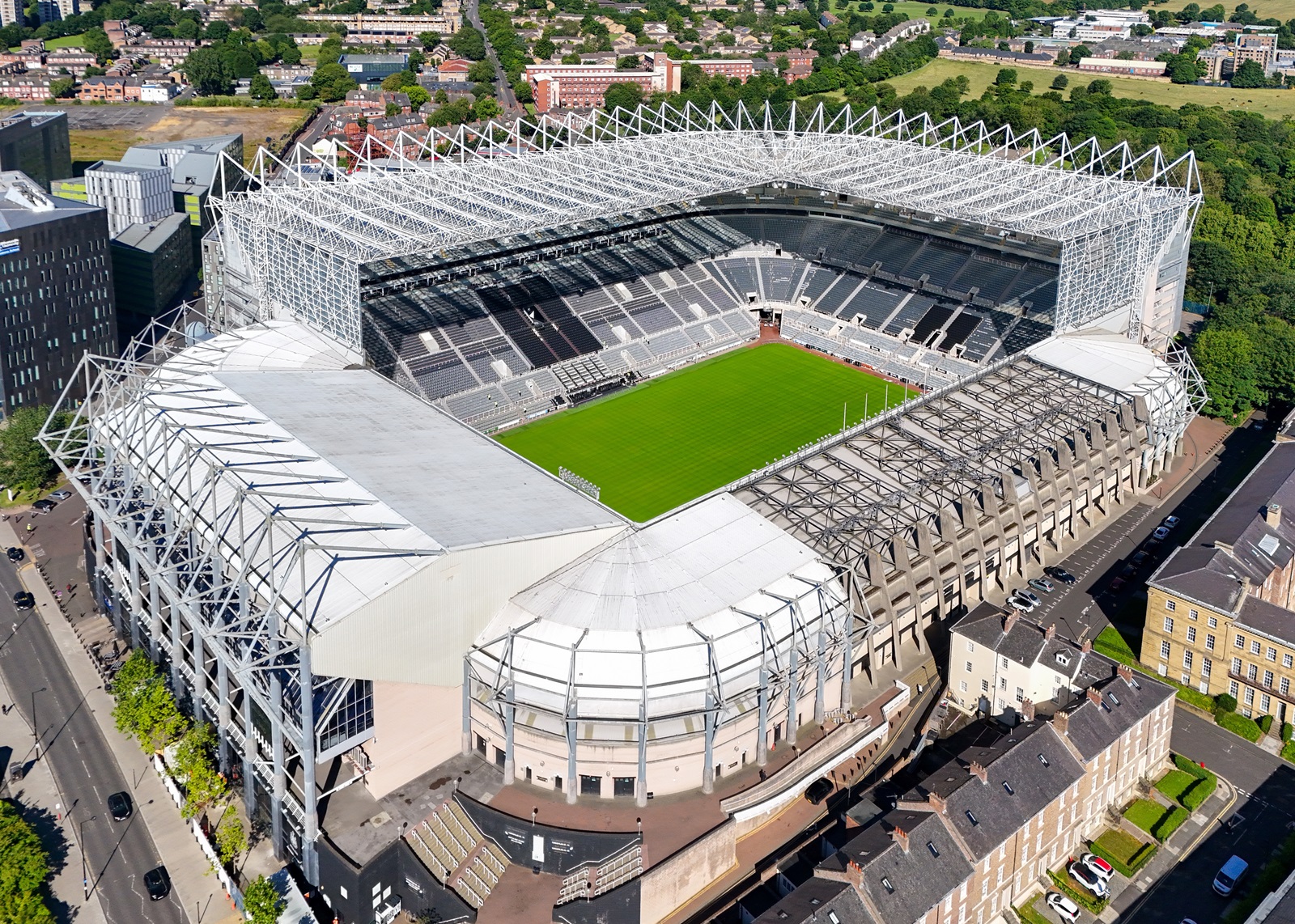
In many ways, St James’ Park was the perfect stage.
Newcastle gave him the platform
Kevin Keegan’s Newcastle United were one of the most thrilling teams of the Premier League’s first decade.
They were brave. They were emotional. They attacked with freedom. They gave supporters memories, even when they did not quite deliver the trophy that seemed within reach.
Gillespie suited that world.
He was not a winger who wanted to slow the game down. He wanted to run. He wanted to cross. He wanted to isolate defenders and force them backwards. In a Newcastle side full of attacking talent, that mattered.
With players such as Les Ferdinand, Peter Beardsley, David Ginola, Faustino Asprilla and later Alan Shearer around him, Gillespie had targets to find and spaces to exploit. Newcastle’s style gave him licence to be positive.
This is the period that makes the “what could have been” debate so strong.
Because at Newcastle, Gillespie did not look like a player who had been cast aside by Manchester United. He looked like a player who belonged on a big Premier League stage.
He was part of a team that pushed Manchester United hard in the title race. He was involved in one of the most entertaining sides English football has produced. He played in front of one of the country’s most passionate fanbases.
Had Newcastle won the Premier League in 1995/96, his legacy might look very different.
That team would not be remembered as the great nearly-men. They would be remembered as title winners. Gillespie would not merely be a talented winger from a famous era. He would be part of one of the most romantic title-winning stories in English football history.
That is how fine the margins can be.
Sometimes a player’s legacy is not only shaped by what he does. It is shaped by what the team around him almost does.
The Barcelona night that showed his ceiling
If there is one match that explains why Keith Gillespie still carries that “what if” tag, it is Newcastle’s famous Champions League win over Barcelona in 1997.
Faustino Asprilla scored the hat-trick. That is the headline. That is the image most people remember.
But Gillespie’s role was enormous.
His wing play caused Barcelona problems all night. He attacked with pace and confidence. He supplied dangerous service. He looked completely at home on a Champions League stage against one of the most famous clubs in world football.
That performance is important because it cuts through lazy revisionism.
Gillespie was not just quick. He was not just a decent Premier League squad player. On his day, he could influence major matches against elite opponents.
That is why his career feels slightly unresolved.
The best version of Gillespie was genuinely exciting. He had the ability to give full-backs a miserable evening. He could stretch games. He could change the rhythm of an attack. He could turn a crowd’s mood by driving forward down the flank.
The Barcelona match showed what was possible.
The frustration is that those peaks did not come often enough or last long enough to make him a true Premier League great.
Injuries and lost rhythm
For a winger like Gillespie, rhythm was everything.
Speed players need sharpness. Wide players need confidence. Attackers who rely on beating defenders need games, momentum and physical trust in their own bodies.
Injuries did not help him.
His Newcastle career had important interruptions, and missing out on the 1998 FA Cup final was a painful example of how bad timing can damage a player’s story. Cup finals matter in memory. They become markers. They shape how careers are retold.
Gillespie’s time at Newcastle also came during a period of change.
Keegan left. Kenny Dalglish arrived. Ruud Gullit followed. The mood around Newcastle shifted. The attacking freedom of the Entertainers era became harder to sustain.
That mattered too.
Some players are shaped perfectly by a manager and a system. Gillespie under Keegan had a clear identity. Newcastle after Keegan became a different environment.
It is another “what if”.
What if Keegan had stayed longer?
What if Newcastle had remained that same fearless attacking side?
What if Gillespie had enjoyed more stability during his best years?
The answers are unknown, but the questions are fair.
Blackburn, Leicester, Sheffield United and the long career
After Newcastle, Gillespie went on to play for clubs including Blackburn Rovers, Leicester City and Sheffield United.
That part of his career is sometimes overlooked, but it should not be ignored.
He was still a useful player. He still had Premier League quality. He still had enough about him to remain in the professional game for years.
At Blackburn, he was part of the squad that won the League Cup in 2002. With Northern Ireland, he built an international career of real substance. Earning 86 caps is not a minor achievement. It speaks to durability, commitment and importance.
That is why the story needs balance.
Gillespie was not a wasted career.
He was a successful footballer.
But the wider feeling remains: the best version of him promised something even more.
Some careers are remembered for what they became. Others are remembered for what they hinted at. Gillespie belongs somewhere between the two.
The off-field battle
No honest feature on Keith Gillespie can avoid the off-field part of his story.
He has spoken openly about gambling problems, financial difficulties and bankruptcy. His autobiography, How Not To Be A Football Millionaire, made the subject central to how many people now understand his life in football.
This should never be used as an easy stick to beat him with.
The 1990s football boom created a strange world for young players. Money was rising fast. Fame was growing. The Premier League was becoming a global product. Players were suddenly earning sums that previous generations could barely imagine.
But support systems were not always where they needed to be.
Today, clubs talk far more about player care, mental health, financial guidance and gambling education. That does not mean modern football has solved those problems. It clearly has not. But there is at least more awareness.
Gillespie came through in a different time.
His story is partly about personal choices, but it is also about an era that moved faster than the structures around it.
That is another reason his career remains so compelling. It is not just a football tale. It is a human one.
It is about pressure. Temptation. Youth. Money. Mistakes. Regret. Honesty. Survival.
And in speaking about those issues, Gillespie has arguably added something important to his legacy. He has become part of a wider conversation about gambling and football that is still relevant today.
Could modern football have helped him?
This is one of the most interesting parts of the debate.
If Keith Gillespie were a 19-year-old winger today, would his career have looked different?
Possibly.
Modern clubs are more scientific. Players have more specialised fitness plans. Injury prevention is more advanced. Video analysis is deeper. Wide players are coached in more detailed tactical roles. Young players often receive more media training, psychological support and lifestyle guidance.
A modern version of Gillespie might have been developed differently.
He might have been taught to play as an inverted winger. He might have been managed more carefully physically. He might have received stronger support around gambling risks and financial planning.
But modern football also brings different pressures.
Social media scrutiny is relentless. Mistakes are magnified. Every performance is clipped, judged and debated. A young Gillespie today would face pressures that did not exist in the same way during the 1990s.
So the answer is not simple.
Modern football might have protected him better. It might also have exposed him to new challenges.
The legacy question
So how should Keith Gillespie be remembered?
Not as a flop.
Not as a failure.
Not as a cautionary tale only.
He should be remembered as a brilliant young winger who came through at the wrong club at the wrong time if the aim was guaranteed opportunity, but at the right club if the aim was elite development.
He should be remembered as the player Newcastle received in one of the Premier League’s most famous transfer deals.
He should be remembered as part of the Entertainers, a team that did not win the title but still won a permanent place in Premier League history.
He should be remembered for that Barcelona night, when he showed he could trouble one of Europe’s biggest names.
He should be remembered for his Northern Ireland career, his longevity and his honesty about the darker side of football life.
Most of all, he should be remembered as a player who had more than moments, but whose moments were strong enough to make people wonder why there were not even more of them.
That is the heart of the story.
Final verdict
Keith Gillespie’s career lives in the space between achievement and imagination.
He achieved plenty. That should never be dismissed. Most footballers would love to have his record, his experiences and his memories.
But football is not only about what happened. It is also about what almost happened.
Gillespie almost became a Manchester United regular during the club’s greatest modern period. He almost became a Premier League title winner with Newcastle. He almost turned his best European nights into a wider reputation as one of the league’s elite wingers.
Almost is not nothing.
In football, almost can last forever.
That is why supporters still remember him. That is why his name still carries intrigue. That is why his career still feels worthy of a longer look.
Keith Gillespie was good enough to matter.
He was also talented enough to make you wonder what might have been.
And that is why his story remains one of the Premier League era’s most fascinating unfinished conversations.